The Penn State Debacle

The more of this story comes out, the more horrifying it is. I’m still wrapping my head around how rotten people can be. John Scazli, I think, has the best thoughts yet about the whole thing. Read it.

Useful Product Tests: Padlocks

Ever need to buy a padlock? Ever give a thought to which brand/model might be the best and protect whatever you’re attempting to protect? I have, but never saw an actual test. Now Popular Mechanics has done it for us. Thanks guys!

I don’t think I’ll cost them any clicks, since really, you should read the article to get a feeling for why they won, but Master was the winner. Luckily, that’s what brand usually shows in stores, so there ya go.

The Ruining of Red Dawn

I’ve been meaning to post this for quite a while, and this lunch I feel the need to write a bit. As some of you may know, the classic 80′s anti-Communist movie Red Dawn was recently remade for a new generation. There was a lot of hype for this movie while it was being made. Lots of ink spilled about how this was going to be a defining pro-American, patriotic movie for kids, like the original was for my generation. Then… nothing. Well, now we know why: MGM got bought out by new interests, and I guess the Chinese market’s pretty important to them. You see, to bring the story line up to date, you can’t have the Russians and the Cubans be the invaders — it’s the Red Chinese that are the bad guys.

I can only paraphrase so much. Go read this and come back; it’s well worth it.

Back now? Good. I heard recently that the movie is set to be distributed next year, and haven’t heard word if it’s still hacked to pieces by bean counters. If it is, I vow not to see the movie. If you don’t understand why this is a Bad Thing, then I’m not sure if I could explain it to you.

By the way, if you feel like multi-national interests have too much control over the major movie industry, and would like to see a revival of American movies (and yes, there are such things as German movies, French movies, Chinese movies — and this isn’t a bad thing for the target audiences), check out Declaration Entertainment. I give regularly.

College Bubble Infographic

I was at a party a couple months ago, and brought up the idea that perhaps — just perhaps — some smart people, depending on where they are in their lives and what they want to do for a career, shouldn’t go to college, an acquaintance tore into me, saying that everyone needed to go to college. This is the sort of person that blows up the rapidly, terminally expanding higher education bubble here in the United States. The pernicious idea that everyone needs to have a college degree, regardless of their capabilities or work/life desires, along with the government — both Federal and state — interfering with market forces, is causing a huge problem. I really feel bad for kids these days and the choices they have to make, and worse for the ones that aren’t told the choices until they have loans they won’t be able to pay down for 20 years.

Here’s a great graphic I saw the other day showing some of the problems that are already here and ones that are currently brewing. Scary. This bubble is going to blow up, and probably not that far down the road.

Do I Get a Kindle, and Which One?

As Amazon, Kindle, or tech watchers know, Amazon released new versions of their very popular Kindle eBook readers early last week. My Aunt wrote me yesterday and asked me my opinion about the announcement (she’s a huge fan of the Kindle and a voracious reader). So, instead of writing an email, I figure I’ll take this opportunity to write a tech-related posted on my blog.

In one word, my response is… impressive. They’ve come a long way, baby, with the Kindle since the first generation, which I was a happy owner of. Really, there’s two Kindle’s to speak of, especially if you’re a current owner of an older generation. The Kindle Touch and the Kindle Fire. The first is simply a evolutionary enhancement from the last generation. If you’re happy with your current Kindle, I wouldn’t bother updating. On the other hand, if you hate using the directional buttons click click click click to navigate, it might be an option. The screen is marginally better, and it’s marginally lighter, but not a big enough difference to make the upgrade cost effective.

The Kindle Fire, of course, is the big news. It’s really the first real threat to the 800 pound gorilla in the tablet space, the iPad. To get this out of the way, it’s NOT a feature-by-feature match with the iPad, and it wasn’t supposed to be. It’s smaller, has less battery life, and is less suited for non-media applications. Think of it like this — they start in different places with different goals. The iPad was always meant to be a tabula rasa, with it’s applications providing it’s usefulness, but with Apple not really going out of it’s way to make it good at any one thing. It’s a jack of all trades. The Kindle Fire, though, knows what it wants to do: provide you with a platform for consuming Amazon-sourced content. Books, of course, but also their digital music, TV shows, movies, and games. In those areas, I suspect it’ll compete rather well with the iPad. It has the full force of the Amazon media ecosystem behind it, second only to Apple’s, and vastly superior to any other competitor. In other jobs, it’ll likely be not a top performer.

This, of course, is all speculation. The announcements have been made, but the reviewers haven’t got the slabs of plastic in their hot little hands to really dig into yet. I’ll close with this: when I bought my iPad, I gave up the Kindle. I’m seriously thinking about getting one again, though. The iPad just isn’t a great eBook reader. It’s too heavy, and the screen is just pathetic in the sun. If I do pull the trigger for the third time, though, it’ll be the Kindle Touch, not the Fire. It’s hard to imagine the Fire being really superior to the iPad in anything except eBook reading.

This a “Partner for Peace”?

Michael Totten has been in Egypt for the past few weeks scouting around, talking to people, and doing general journalistic investigations. He was lucky (!) enough to get an interview with a high ranking member of the Muslim Brotherhood there, and posted the word-for-word transcript. I finally got around to reading it today: BRAVO. I was laughing at parts and shaking my head at others. It’s definitely worth a read, if you’re curious to who might be having a large part of running Egypt someday soon.

I can see why both the US and Israel really, really doesn’t want these guys having much say in the foreign policy of their country. Ick.

Neuroscience and the Criminal Justice System

My wife passed to me an interesting article about the state of neuroscience and its impact upon our criminal justice system. Fair warning: I read the blog post and not the original essay. I agree with some of what the author of the essay has to say. Our criminal justice system is a hodgepodge of competing goals, some of which act as exclusive to one another, unfortunately. What’s jail for, after all? To protect society? To punish the guilty? To deter future crimes? As it currently sits, all of the above, and that can create all sorts of issues.

Into this environment, add the concept of “guilt” with regards to mental health. Neuroscience and genetic psychology are getting better all the time, and over and over again, it’s pointing to the dominating role genes play in not only our life course, but our everyday actions. I’m currently reading Selfish Reasons to Have More Kids: Why Being a Great Parent is Less Work and More Fun Than You Think, which cites tons of research with twins to pretty much settle the “nurture vs. nature” argument. It’s nature, hands down, within some common sense boundaries.

Where I part ways with the author of the essay first mentioned is his dismissal of the idea of free will. For the most part, I think that idea is a non-starter, and neuroscience and genetic research doesn’t disprove any of it, at least from my perspective as an interested layman. Outside of extreme cases (like his mention of Tourette’s syndrome), free will certainly does exist on a micro and macro scale. Arguing that it doesn’t strikes me as more of a college level coffee house debate than anything else. I think a better way of viewing the role of genetics and neuroscience in a person’s actions is that those genes, and their expressions, create a likely range of actions and decisions. It doesn’t pre-suppose them. This discussion makes for great science fiction, interesting theological discussions, and fun arguments, but it ends where reality begins, in my opinion.

His arguments about how we should reform our criminal justice system is on much firmer ground. How much the convicted is blameworthy shouldn’t have any bearing on if they should be locked up or not. But of course, this assumes that the system is setup primarily for the protection of society, which it’s only partially so. Other use is to extract justice upon the evil doers, in lieu of the victim. In this case, the blameworthiness of the convicted does have a bearing, right? Lawmakers and judges should be operating from a clear set of principles on the why, and not only the how.

25 Years of the Columbia Gorge Commission

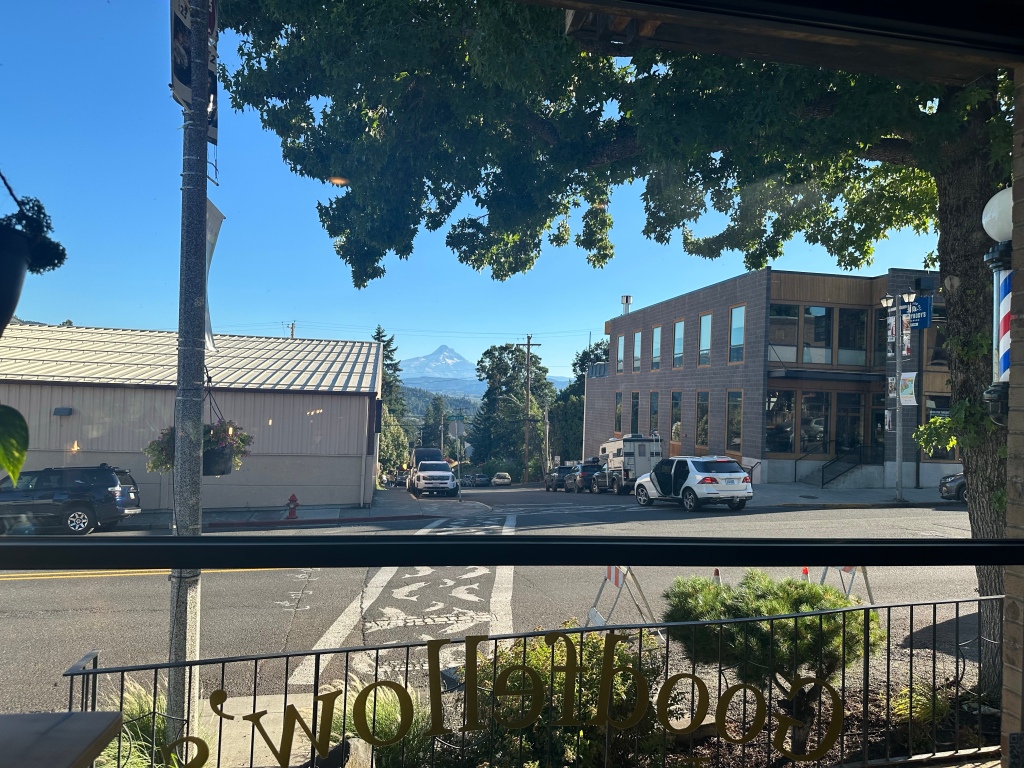
Thank God for Google Alerts. I have an alert setup to send me, up to once a day, a list of references on the Web to “white salmon”, the town I grew up in. Even though I haven’t lived there for (wow) almost 20 years, I try to keep up on the goings on. Google Alerts forwarded me an article in the Columbian newspaper about 25 years of the Gorge Commission, created from the Columbia River Gorge National Scenic Area Act, signed by President Reagan.

It’s a long piece, with lots of background, and an obvious attempt at balance. I’d love to hear reactions from people in the Gorge that have lived through the Commissions reign. They have some, and the comments afterwards touch upon it, but it’s only scratching the surface. No other single event has impacted the lives of those living in the Columbia River Gorge as much in my lifetime.

What made me post this? This paragraph here:

Counties were given a choice: Adopt their own ordinances implementing the management plan or let the Gorge Commission oversee development. Eventually five counties adopted ordinances. The holdout was Klickitat County. To this day, Gorge Commission staff reviews all applications for development in the part of Klickitat County that lies within the scenic area. Because it chose to ignore the law, Klickitat is not eligible to receive economic development money.

That’s the county that White Salmon’s in. Who would have thought that the county would have been a den of rebels!

Best Review of The Killing Finale Yet

This guy over at ESPN nails my reaction to the final episode of season one of The Killing pretty much perfectly. I know that the show runner for The Killing is of the opinion that all publicity is good publicity, but that’s not true, is it? Ask Rep. Weiner or New Coke.

Walter Russell Mead on the American Dream (Part Three?)

One thing that Walter Russell Mead is very good at is flying above it all and laying out a broad picture of events, in the context of our shared history. I almost always learn something (or a lot of things, for that matter) when I read his stuff. He always makes me think and reconsider things I thought I knew in a new light. If you find an author like this, bookmark them and read them.

I’m personally convinced that we’re seeing a slow motion collapse of the old, post WW2 order of things, to be recreated as something, well, unknown at this point. So, when I saw his two part series on “The Death of the American Dream”, I read it immediately. It’s very compelling and insightful. He talks about what we all know — the catastrophic drop in housing values throughout America.

The damage is heavy. For most Americans, their single biggest asset is the equity in their home. At the peak of the boom, total net home equity in the US (the value of owner occupied homes minus the remaining mortgage debt) stood at 13 trillion. Today it is down to $6.5 trillion. America’s home equity losses are greater than the GDP of Japan.

But he goes deeper than that, arguing that this isn’t a temporary drop, but a fundamental shift of what it means to be a successful middle class citizen of America.

But something has, I think, changed. Something big. Humpty Dumpty has fallen off the wall. A social ideal has received an irrecoverable blow and the era of consuming our way to prosperity is drawing to a close. The country has maxed out its credit cards, and we are going to have to live within our means.

In the second essay, he goes ties together how shifting technology, societal norms, and demographics caused the death of the Family Farm as surely as it’s destroying this particular dream. We seemed to have solved the last shift. Maybe by looking back at those challenges and how we met them, we can find clues as to how to go forward now.

Here’s Part One and Part Two.